Set a 4 cm aquamarine crystal beside a 1.2 carat aquamarine cut as a round brilliant and the two look like strangers. One shows how the mineral grew; the other shows what light does inside it. Collectors argue about which is the better buy, and the argument rarely ends, because rough and cut answer different questions. Neither is better in the abstract — only relative to what you want from a collection and how you intend to keep it.
Two different objects, not two grades of the same thing
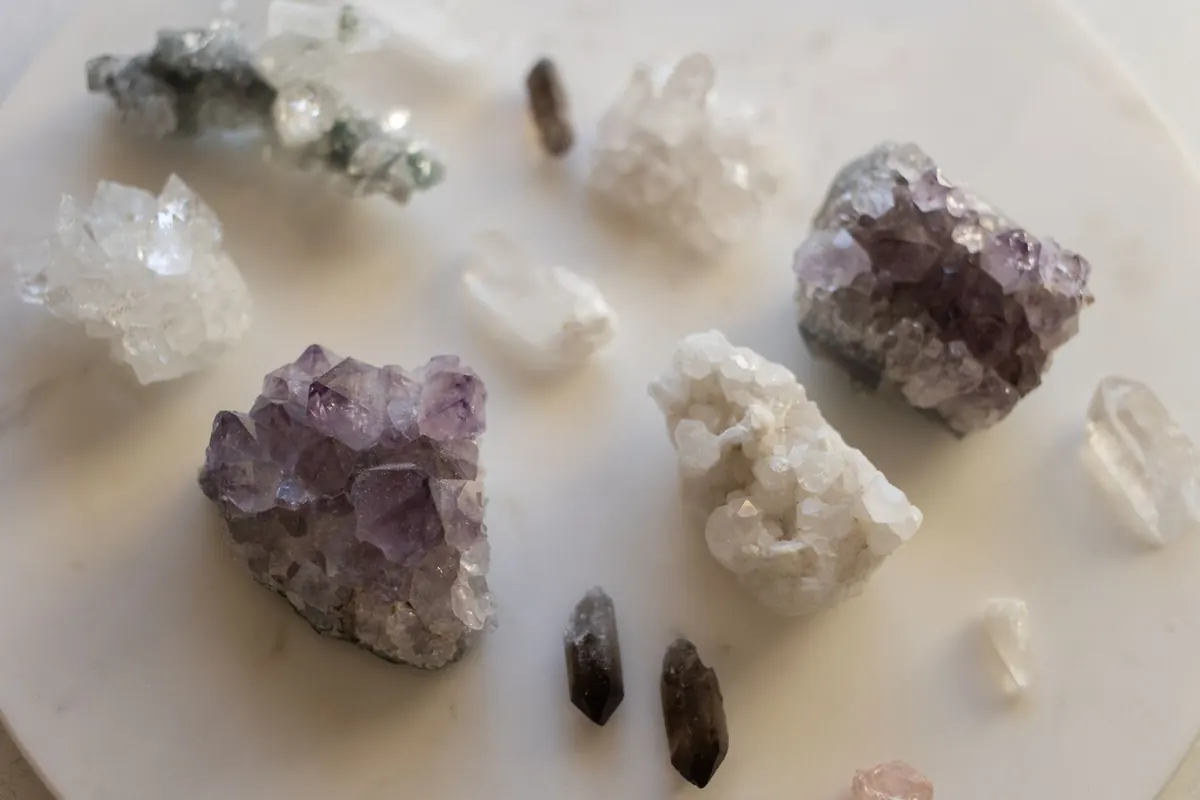
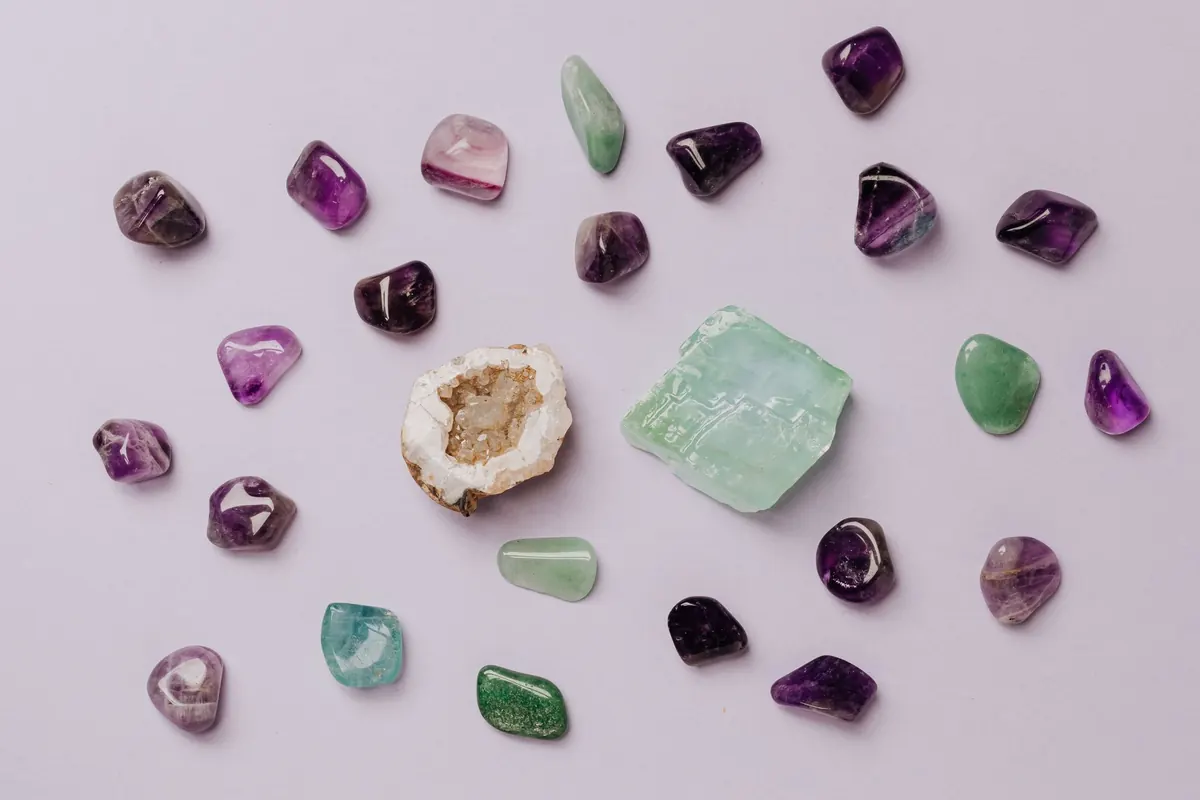
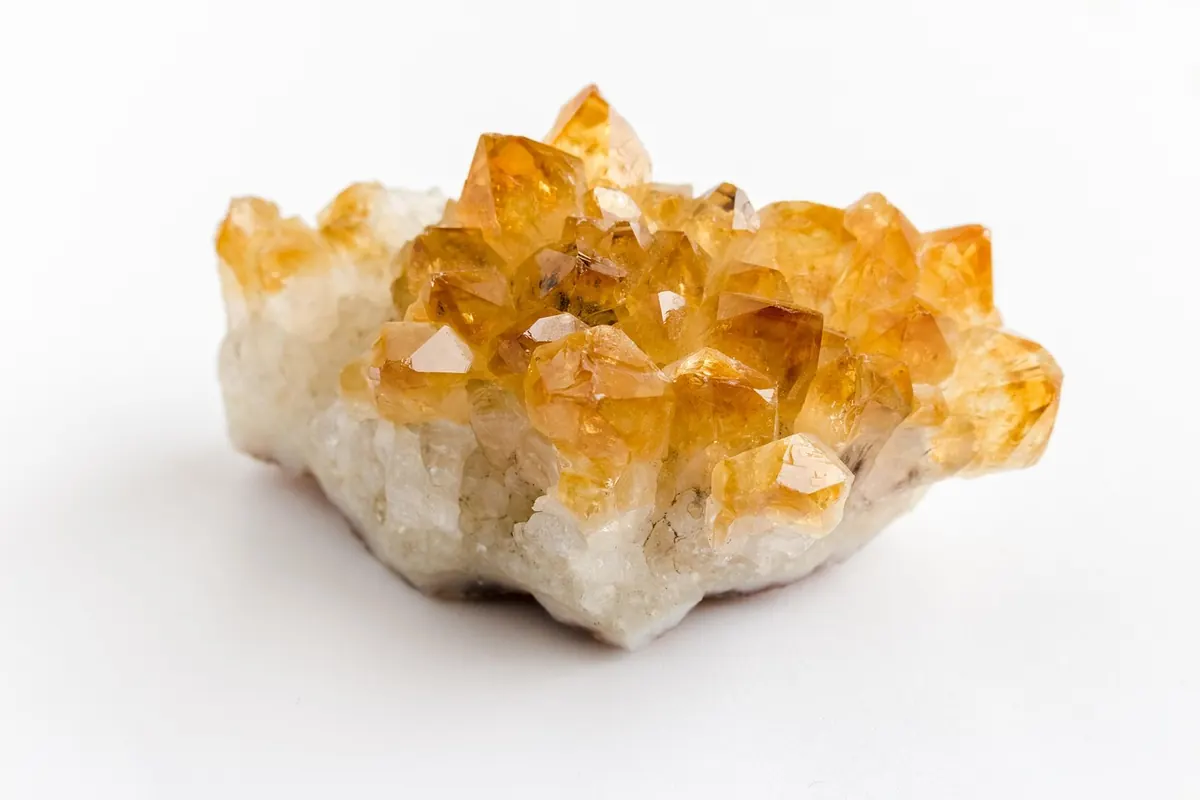
Rough means the material as it came out of the ground: a terminated crystal, a cluster still sitting on matrix, a banded agate nodule, a water-worn pebble. Cut means a finished stone — faceted, or shaped into a cabochon when the material has a star, a cat's eye or a pattern worth preserving.
The distinction matters because cutting destroys evidence. A crystal carries a record of how it grew: growth zoning, inclusions of a neighbouring mineral, the shape of its termination, the matrix it rested in. Faceting removes most of that, and sometimes all of it. In its place you get a record of light behaviour — brilliance, dispersion, the way a well-angled crown sends colour back through the table.
Cutting is also lossy. A good deal of a crystal ends up as offcuts and powder, which is why a fine specimen is sometimes worth more left alone than sliced into mediocre stones.
Where rough specimens win
Character, mostly. A tourmaline with a green core and a pink rim tells you something about the pocket it grew in. A purple fluorite cube perched on white quartz is a small piece of geology you can hold. Faceted stones are beautiful, but they are also uniform in a way that specimens never are.
Locality is the other big draw. A specimen label can name the mine, the district, sometimes the pocket. A faceted stone is usually anonymous once it leaves the cutter, and even a laboratory report will say origin rather than this hillside, this year. For collectors who care about where things come from, that difference is the whole point.
Availability matters too. Plenty of species are common as specimens and effectively unheard of as faceted gems, because the crystals are too small, too included or too soft to take a polish. And common species in good condition remain an affordable way into the hobby, even if exceptional specimens are anything but cheap.
Where cut gems win
Light. A well-cut stone does something no rough crystal can: it gathers light and throws it back at you, splits white light into flashes of colour, or shows a crisp star across a dome. Cut quality is also where a great deal of value hides — a poorly proportioned stone can look dull next to a smaller, better-made one.
Comparability is the second advantage. Faceted gems are discussed in a shared language of colour, clarity, carat weight and cut, and reputable laboratories such as GIA, SSEF and Gübelin issue reports on more valuable stones. That makes them easier to value, insure and eventually sell.
Then there is wear. A cut gem can leave the cabinet, set into a ring or pendant, and be enjoyed in daily life. Cabochons deserve a mention here as well: opal, star sapphire, cat's eye chrysoberyl and turquoise are cut to a dome precisely because a dome is what shows their best face.
Storage, light and handling
Whichever route you take, the practical care is similar in spirit and quite different in detail.
- Keep faceted stones in individual boxes or soft paper parcels. Diamond, corundum and quartz will scratch each other if they rattle together in one tray.
- Stand rough specimens upright or bed them on foam. A crystal that topples onto a hard shelf can chip a termination or snap a thin prism.
- Keep light-sensitive species out of direct sunlight. Some coloured quartz, certain fluorites and several silver-bearing minerals are safer in a cabinet away from a window.
- Label everything the day it arrives: species, locality, date acquired, what you paid. Provenance you can document is worth far more than provenance you merely remember.
- Handle with clean, dry hands, and avoid unnecessary contact with polished faces and facet junctions.
- Photograph new pieces, including any chips or repairs, and keep receipts and reports with the item.
Value, liquidity and the investment question
Cut stones are easier to compare and easier to sell. Two sapphires of similar weight and colour can be discussed in a sentence, and there is a functioning market at most price levels. That liquidity is real, though it is never a promise of profit.
Specimens trade in a thinner, more subjective market. Aesthetics carry enormous weight: crystal form, condition, matrix, symmetry, whether the piece simply sits well on a shelf. A well-documented specimen from a classic locality, in fine condition, can hold value nicely — but the buyer may take years to appear, and results are less predictable than for mainstream faceted gems.
Disclosure matters in both directions. Oiled emeralds, heat-treated sapphires and fracture-filled stones should be described as such. A specimen with a repaired crystal or a stabilised matrix should be labelled too. Quietly leaving treatment out of a description is the fastest way to lose money and goodwill.
If a purchase is big enough to affect your finances, treat it as you would any other asset and seek independent advice from a qualified gemmologist or appraiser before you commit rather than relying on a seller's description alone.
Choosing between them
Most collectors eventually stop treating this as a choice and keep both: a cabinet of specimens for study and display, a small tray of faceted stones for light and wear. If you are deciding where to put your next budget, work through these in order.
- Decide what the piece is for — studying under a loupe, displaying on a shelf, wearing, or holding as an asset.
- Check what the species actually offers. If you love emerald's colour but not its inclusions, buy cut. If you love the way crystals grow, buy rough.
- Buy one strong example rather than three ordinary ones. Condition and form beat size almost every time.
- Get the paperwork: labels, reports, receipts, photographs.
- Store and insure it properly from the first day, not after something chips.
Start with what you genuinely enjoy looking at, and the rough-versus-cut argument tends to settle itself.
Photo: KAVOWO / Pixabay