Birthstone jewellery is one of the few gifts that suits almost anyone, and the idea behind it is centuries old. The lists, however, are not fixed. The stone you are offered for a given month can differ between a high-street chain, a vintage dealer and an online seller — and that is before anyone mentions the traditional alternatives.
None of which means you should buy blindly. Knowing which stones survive daily wear, which treatments are routine, and where your money actually goes will separate a piece that lasts a lifetime from one that lives in a drawer.
The modern birthstone list, month by month
The version most jewellers work from today is a twentieth-century arrangement, built from older tradition and from stones the trade could supply reliably. Treat the alternatives below as legitimate choices rather than consolation prizes.
- January — garnet. Classic deep red, though garnet also occurs in green, orange and purple. Hard-wearing, widely available and strong value at larger sizes.
- February — amethyst. Purple quartz, often cut into generous stones for modest money. Fine for pendants and earrings; years of strong direct sunlight can dull the colour.
- March — aquamarine. Pale blue to greenish blue beryl, usually heated to remove the green. Traditional alternative: bloodstone.
- April — diamond. The hardest stone in common use, though that is not the same as unbreakable — a sharp knock near the edge can still chip it. Older lists sometimes name rock crystal.
- May — emerald. Green beryl, almost always treated with oil or resin to disguise natural fractures. Gorgeous, and the stone that asks most of its owner.
- June — pearl, moonstone or alexandrite. Three very different options: soft organic pearl, milky feldspar and the colour-changing chrysoberyl.
- July — ruby. Red corundum and one of the toughest stones you can wear. Traditional alternative: carnelian.
- August — peridot or spinel. Peridot is a distinctive yellow-green; spinel gives ruby-like colour, frequently untreated, for less. Traditional alternative: sardonyx.
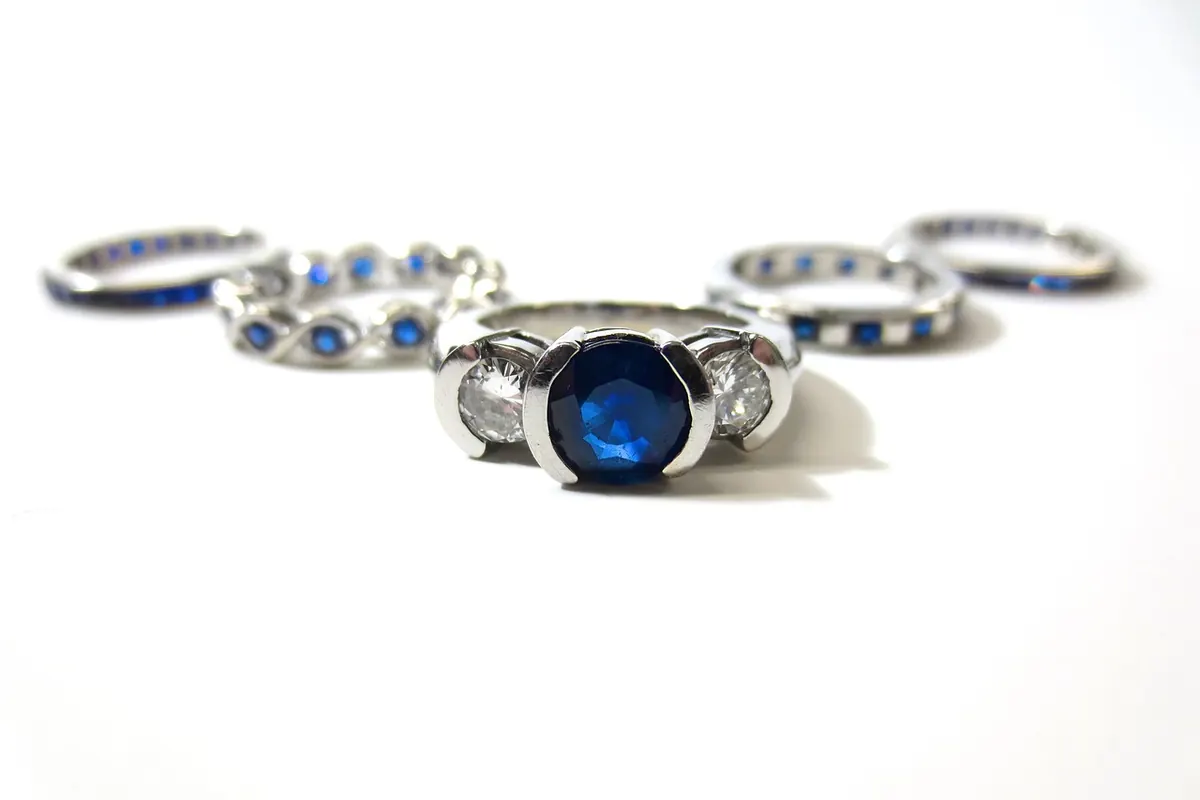
- September — sapphire. Usually thought of as blue, but also found in pink, yellow, green and padparadscha. Traditional alternative: lapis lazuli.
- October — opal or tourmaline. Opal is relatively soft and water-bearing; tourmaline comes in nearly every colour and is the more robust everyday choice.
- November — topaz or citrine. Blue topaz is normally treated by irradiation and heating; citrine is yellow quartz and excellent value. Traditional alternative: topaz in its golden form.
- December — turquoise, zircon, tanzanite or blue topaz. Turquoise is porous and often stabilised; tanzanite is soft enough that a daily-worn ring will show its age.
Alternatives: traditional, lab-grown and lookalike
Traditional stones
Older lists — the ones tied to the twelve stones of the breastplate and to Victorian sentiment — swap in bloodstone for March, carnelian for July and lapis lazuli for September. If someone has their heart set on a stone their grandmother wore, this is often the version they mean.
Lab-grown and synthetic
Lab-grown diamonds and sapphires have the same chemical and optical properties as mined stones and can cost considerably less. Synthetic alexandrite and synthetic emerald are common too, while moissanite and cubic zirconia are deliberately sold as lookalikes rather than imitations of anything. None of this is dishonest — but a seller should tell you clearly which one you are buying, and the receipt should say so.
Close colour matches
Blue topaz stands in for aquamarine, citrine for yellow topaz, red garnet or spinel for ruby, and green tourmaline for emerald. A well-cut substitute in a good setting often looks better than a poor example of the real thing.
Choosing a stone the wearer can actually live with
Rings take the knocks, so match the stone to the job. If the birthstone is soft — opal, pearl, turquoise, tanzanite — a pendant, brooch or pair of earrings will hold up far better than a ring worn daily. If it has to be a ring, consider a bezel setting or protective shoulders over an exposed claw setting, and think about whether the stone will sit on a hand that types, lifts or works with tools all day.
Hardness on the Mohs scale is useful shorthand but not the whole story. Emerald is reasonably hard yet full of inclusions; topaz is hard but cleaves cleanly in one direction if struck; zircon is brittle and its facet edges abrade over time. A good jeweller will tell you honestly when a stone is better suited to occasional wear.
Care notes worth remembering
- Ultrasonic and steam cleaners: safe for diamond, ruby, sapphire, spinel and garnet. Avoid them for emerald, opal, pearl, turquoise, tanzanite, zircon and treated topaz.
- Pearls: last on, first off. Keep perfume, hairspray and lotions away, wipe with a soft damp cloth, and have a frequently worn strand restrung every few years.
- Opal: sensitive to sudden heat and to very dry storage. A soft pouch in a normal drawer is better than a hot car or a bank vault.
- Emerald: no chemicals, no steam, no ultrasonic. Ask your jeweller to check whether the stone may need re-oiling in future.
- Turquoise: porous, so keep it clear of sunscreen, chlorine and cleaning products, and expect stabilised stones to be the practical choice for everyday wear.
- Silver: tarnishes. Store it in a sealed bag with an anti-tarnish strip and polish with a soft cloth rather than an abrasive dip.
What drives the price
Colour comes first, then size, then clarity, then cut — and origin or brand premiums come after all of them. A fine small stone in a well-made setting nearly always beats a large, dull one. Treatments and synthetics lower the price and are worth asking about directly, because the same colour can be worth very different amounts depending on how it was achieved.
If the budget is tight, buy a smaller stone in a better colour, choose a pendant or studs rather than a ring, or look at pre-owned pieces, which often carry more stone for the money. Avoid paying a premium for a designer name on a simple setting unless the design itself is what you want.
Buying birthstone jewellery in the UK
Precious metal items sold here are normally hallmarked, showing the maker, the assay office and the fineness of the metal — a useful check on any piece you are considering. Ask what treatment the stone has had, get it noted on the receipt, and confirm the return window before you buy: most online orders can be cancelled within fourteen days of delivery, but bespoke, resized and engraved pieces are usually excluded.
Check the sizing carefully if you are buying remotely, and keep the paperwork. For anything of real value, an independent written valuation plus a specialist insurance policy is worth arranging, and a broker can tell you what is and is not covered away from home. If the purchase matters financially, treat it like any other significant buy: compare, ask questions, and get a second opinion before you commit.
Birthstones are a tradition, not a promise. Buy the stone you like, in a quality you can see, from someone willing to explain what you are getting — that is the part that lasts.
Photo: sarakgraves / Pixabay